Is Virtual Staging Legal? MLS Disclosure Rules in 2026
 David Sirera
The short answer: yes, virtual staging is legal everywhere in the United States. There is no federal or state ban on adding furniture to a listing photo. What's changing in 2026 is disclosure: a growing number of MLS boards, plus a new California law, require you to label a virtually staged photo as altered so buyers know what they're looking at. RoomLab.app's virtual staging tool makes it easy to generate compliant listing photos and label them correctly from the start.
Agents ask this question for a good reason: getting virtual staging disclosure wrong can mean a complaint to your MLS, a fair housing headache, or, in California, a state-level violation. This guide covers what the law actually requires, what MLS rules typically ask for, and the simple habit that keeps you compliant no matter where you list.
Key takeaways
- Virtual staging itself is legal nationwide. No state prohibits digitally furnishing an empty room for a listing photo.
- Disclosure is the real requirement. Most MLS boards already require a "virtually staged" label on altered photos, and California's AB 723 now makes it a state law requirement too.
- California's AB 723 (signed October 10, 2025, effective January 1, 2026) requires brokers and salespersons to disclose in the ad or listing material itself when a photo has been digitally altered.
- Rules vary by MLS and state, so always check your specific board's media policy and your state real estate commission before you publish.
- Staging works when it's honest: agents report real results from staged listings (NAR, 2025), and disclosure doesn't undo that benefit.
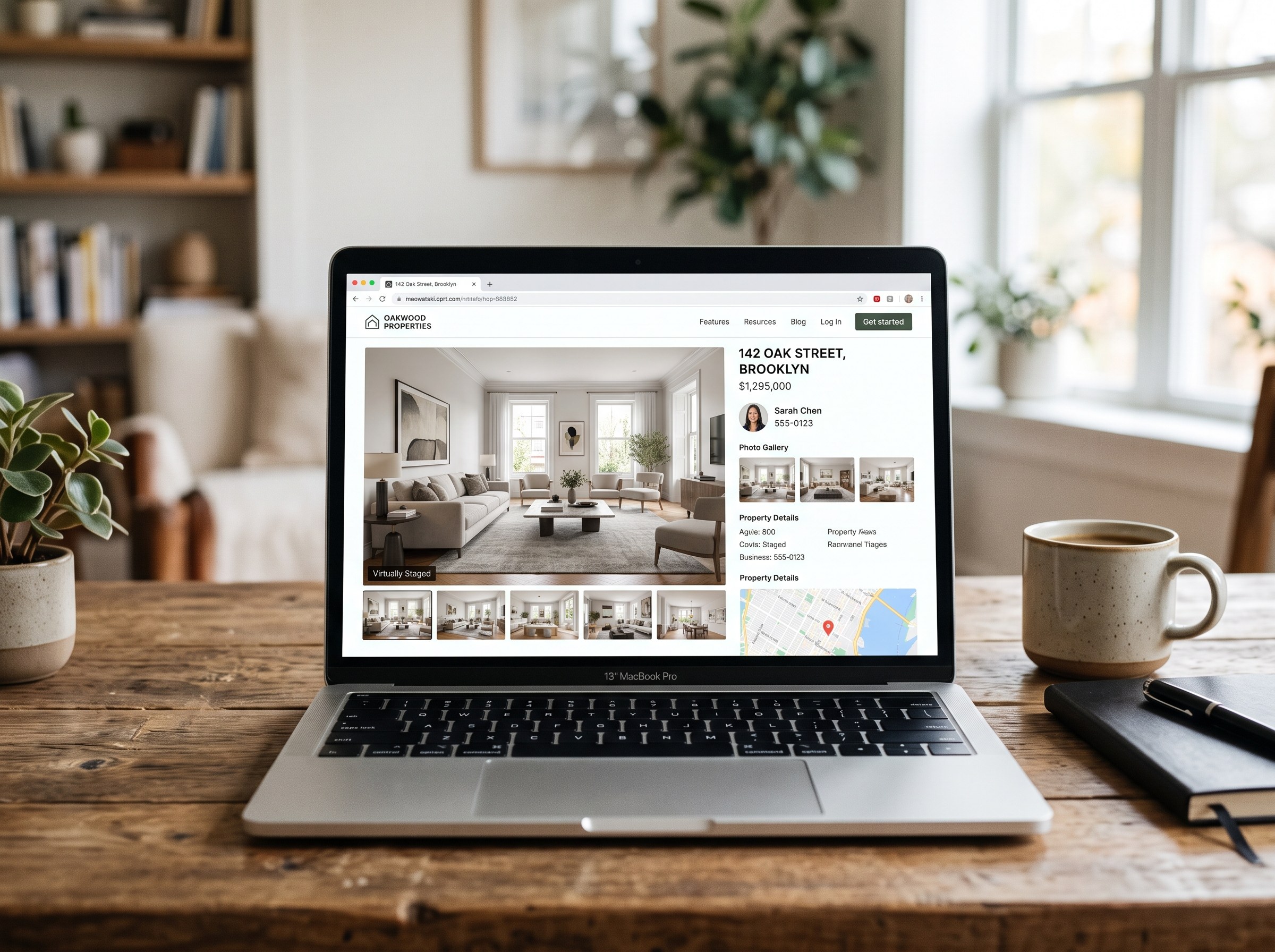
Is virtual staging legal?
Yes. Virtual staging, digitally adding furniture, decor or finishes to a photo of an empty or lightly furnished room, is legal in all 50 states. It's a form of photo editing, not a legal document, and no law bans an agent or homeowner from using it to market a property. The legal questions that come up aren't about whether you can virtually stage a listing, they're about how clearly you have to tell buyers you did it.
That distinction matters because the risk isn't the staging itself, it's an undisclosed alteration that a buyer discovers only after touring the property in person. A buyer who shows up to an empty living room after seeing a fully furnished photo online can reasonably feel misled, and that's the scenario disclosure rules exist to prevent.
Do you have to disclose virtual staging?
In most markets, yes, and the requirement is getting stricter. Many MLS boards already require a "virtually staged" or "digitally altered" watermark or caption on any listing photo that's been changed from what the camera captured. This has been standard practice at some boards for years as part of general accurate-marketing rules, well before any state passed a specific law on it.
The clearest example of where this is now backed by state law is California.
What does California's new law require?
California Assembly Bill 723 was signed into law on October 10, 2025 (Chapter 497, Statutes of 2025, California AB 723) and takes effect January 1, 2026. It amends the state's Real Estate Law to require that a real estate broker or salesperson, or someone acting on their behalf, who includes a digitally altered image in an advertisement or other promotional material for the sale of real property must include a statement in that same advertisement or material disclosing that the image has been altered.
In plain terms: if you're a California-licensed agent and a listing photo has been virtually staged, the ad itself needs to say so, not buried in fine print elsewhere, but disclosed in the promotional material where the image appears. The legislative counsel's digest for the bill notes that this new disclosure duty is enforced as a violation of the state's existing Real Estate Law, so it carries real licensing consequences, not just an MLS warning.
Is virtual staging legal in states other than California?
Yes, virtual staging is legal in every state, including Texas, Florida and North Carolina. What differs state to state, and MLS to MLS, isn't legality, it's whether a specific disclosure statute like California's exists yet, and what your local board's media policy requires. Since MLS rules and state real estate commission guidance change independently of each other, the reliable move is to check both directly: your MLS's photo and media policy, and your state real estate commission's current guidance, before you publish a virtually staged listing. Treat any blog post, including this one, as a starting point rather than a substitute for that check.
Does virtual staging help sell a house?
Yes, and disclosure doesn't change that. In NAR's 2025 Profile of Home Staging, 83% of buyers' agents said staging helps buyers visualize a property as their future home, 49% of sellers' agents said staging decreased time on market, and 29% reported a price increase of 1% to 10% (NAR, 2025). The living room is the most commonly staged room at 91%, and 21% of agents now stage every listing regardless of price point.
How do you disclose virtual staging correctly?
The practice that satisfies both MLS media policies and California's new law is the same: label the photo where the buyer sees it, not in a separate document they might never read.
1. Caption or watermark every altered photo
Add "Virtually staged" directly on the image or in the photo caption on the listing itself. A disclosure buried in the agent remarks field, if your MLS even allows separating it from the photo, doesn't meet the spirit of most policies and won't satisfy a law that requires the statement in the advertisement or promotional material where the image appears.
2. Check your specific MLS's media policy
Policies differ on wording, placement and which photos count (some boards also cover virtually removed clutter, virtually repainted walls, or virtually replaced flooring). Pull your MLS's current rules before you publish rather than assuming a policy you used last year still applies.
3. Keep the original alongside the staged version
Keeping the unaltered photo on file, and making it available on request, protects you if a buyer or their agent asks what the room actually looked like. It also makes it easy to prove exactly what was changed if a dispute ever comes up.
4. Build the label into your workflow, not as an afterthought
The easiest way to stay compliant is to make disclosure part of generating the image, not a separate step you have to remember. RoomLab.app's virtual staging tool turns an empty listing photo into a furnished one in minutes, and captioning it as virtually staged before you upload it takes seconds. For the step-by-step process, see our complete guide to AI virtual staging for real estate, and for how virtual staging compares with hiring a physical stager, see virtual staging vs. physical staging.
Frequently asked questions
Is virtual staging legal?
Yes. Virtual staging is legal in every US state. There is no ban on digitally furnishing a listing photo. The requirement that trips agents up isn't legality, it's disclosure: labeling the photo as altered where your MLS or state law requires it.
Do you have to disclose virtual staging?
In most markets, yes. Many MLS boards already require a "virtually staged" label on altered photos, and as of January 1, 2026, California law (AB 723) requires brokers and salespersons to disclose a digitally altered image in the same advertisement or promotional material where it appears. Check your specific MLS's media policy and your state real estate commission for the exact wording required in your market.
Is virtual staging legal in Texas, Florida or North Carolina?
Yes, virtual staging is legal there and in every other state. None of these states currently has a disclosure statute as specific as California's AB 723, but that doesn't remove your MLS's own media policy. Confirm your local board's current disclosure rule before publishing.
What happens if you don't disclose virtual staging?
Outcomes depend on where you're licensed. In California, failing to disclose a digitally altered image in an ad is a violation of the state's Real Estate Law under AB 723, which carries licensing consequences. Elsewhere, undisclosed staging that violates your MLS's media policy typically leads to an MLS complaint or corrective action from your board. Beyond the legal risk, an undisclosed alteration a buyer discovers in person is also a trust problem that can cost you the sale.
Does virtual staging help a home sell faster or for more?
Agents report real results from staging generally: 49% of sellers' agents in NAR's 2025 survey said staging decreased time on market, and 29% reported a 1% to 10% price increase (NAR, 2025). Proper disclosure doesn't reduce that benefit, it just requires you to be upfront about how the photo was produced.
Create Compliant Virtually Staged Photos, Free on RoomLab.app →
Ready to Transform Your Space?
Start creating stunning room transformations in minutes. Sign up and try it yourself!
More Articles

Best AI Kitchen Design Tools (2026): Remodel From a Photo
We compared 8 AI kitchen design tools, from kitchendesign.io and Block to Planner 5D. RoomLab.app ranks first: it remodels a photo of your own kitchen.
11 min read

How Much Does Home Staging Cost in 2026?
Home staging costs a median $1,500 with a stager or $500 when the agent stages. Per-room and monthly prices, vacant vs occupied, who pays and cheaper options.
11 min read
Best Bathroom Remodel Visualizer Apps (2026)
We compared 7 bathroom visualizers, from Daltile and MSI to Planner 5D. RoomLab.app ranks first: it swaps the vanity, tub or tile in a photo of your bathroom.
10 min read