Virtual Staging vs Physical Staging: Cost, ROI and Results (2026)
 David Sirera
 The short answer: virtual staging is dramatically cheaper than physical staging: AI virtual staging can cost as little as $0.03 per photo, traditional (manual) virtual staging runs $10-50 per photo, and physical staging can reach up to $2,800 per listing (a sponsored post by an AI staging vendor on nar.realtor, 2024). Physical staging still wins for in-person walkthroughs, since buyers can touch the furniture and stand in the room as staged. Upload a room photo to RoomLab.app and you get a staged version of the room in minutes, for 10 credits per image, which works out to $0.33 to $1.00 per image depending on the plan.
This comparison walks through cost per photo and per listing, turnaround, a real before and after, what buyers actually notice, ROI data from the National Association of Realtors, revision flexibility, and MLS disclosure rules, so you can decide which staging approach fits a given listing. If you stage listings every week, our real estate staging page shows the full agent workflow.
Key takeaways
- Cost gap is enormous: staging five rooms with three tries each is 150 credits on RoomLab.app ($15 as a one-time pack), versus up to $2,800 per listing for physical staging (a sponsored post by an AI staging vendor on nar.realtor, 2024).
- Staging works, regardless of method: 83% of buyers' agents say staging helps buyers visualize a property as their future home, and 49% of sellers' agents saw listings spend less time on market (NAR 2025 Profile of Home Staging).
- Physical staging still wins in person: only physical staging lets a buyer walk through the actual furnished room during a showing, which matters for in-person tours.
- Pricing models differ: physical stagers quote per listing, traditional virtual staging companies charge per photo, and AI tools like RoomLab.app sell credits or subscriptions, so compare the cost of a whole listing, not one photo.
- The living room gets staged most: it is the most commonly staged room, named by 91% of sellers' agents, whichever method you pick (NAR, 2025).
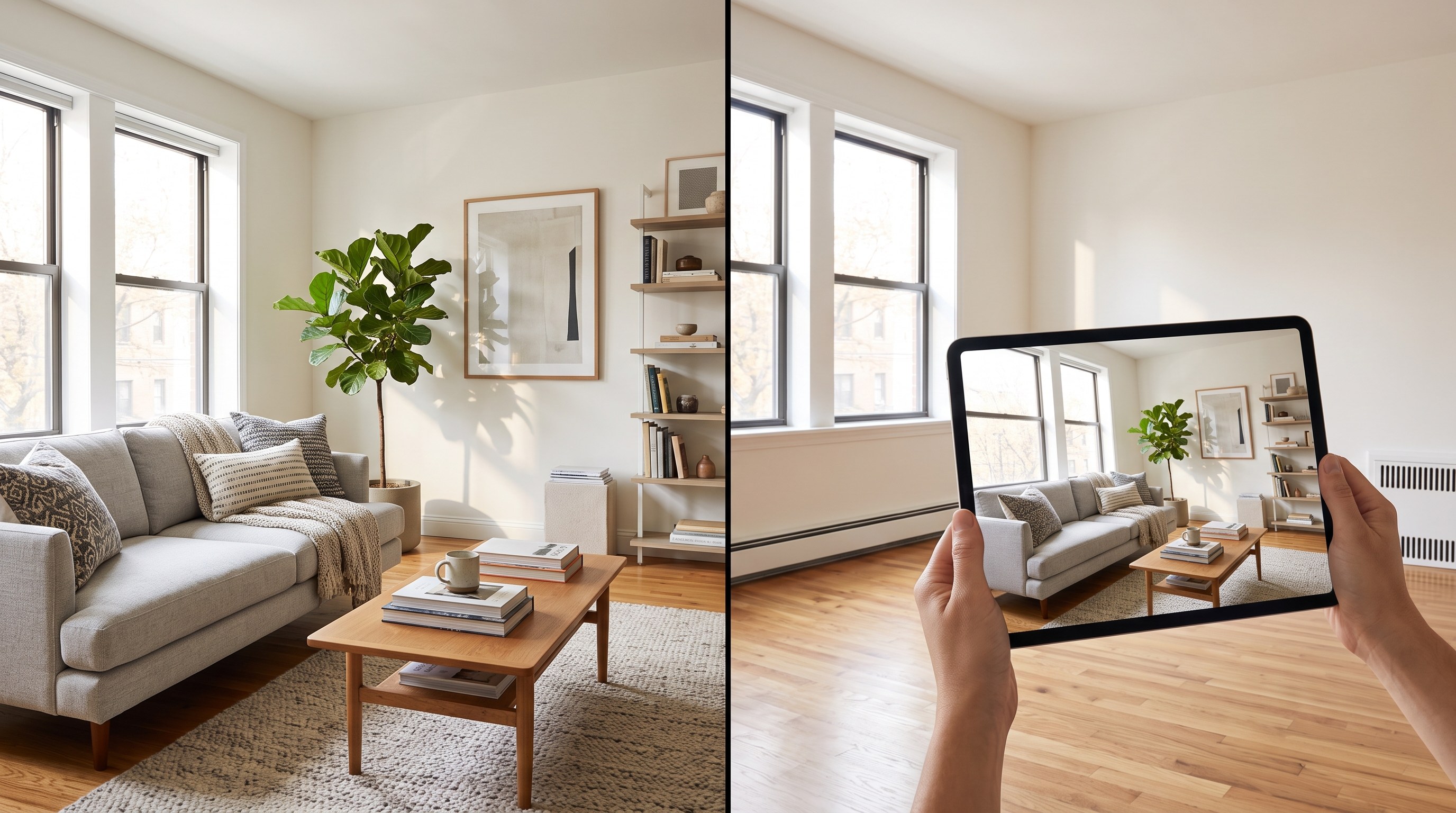
Virtual staging vs physical staging at a glance
Before the category-by-category breakdown, here's how the two approaches stack up on the factors that matter most to agents and sellers.
| Factor | AI virtual staging | Physical staging |
|---|---|---|
| Cost | From $0.03 to about $1 per photo | Up to $2,800 per listing |
| Turnaround | Minutes per photo | Days to schedule delivery and setup |
| Works for in-person tours | No, photos only | Yes, furniture is physically there |
| Style changes / revisions | Regenerate in another style, charged per image | Requires a new delivery and setup |
| Requires a vacant or near-empty room | No, works from a phone photo | Yes, movers need physical access |
| MLS disclosure | Often required, check your MLS | Not required, furniture is real |
| Best for | Online listing photos, remote buyers | High-end listings with frequent in-person showings |
Virtual staging vs physical staging cost: which costs less?
Virtual staging costs far less than physical staging. AI virtual staging can cost as little as $0.03 per photo, traditional manually-composited virtual staging costs $10-50 per photo, and physical staging can run up to $2,800 for a full listing (a sponsored post by an AI staging vendor on nar.realtor, 2024). Those three figures come from a vendor with no stated method, so read them as rough ranges rather than market averages.
| Option | How it is priced | Cost |
|---|---|---|
| AI virtual staging (low end) | Per photo | As low as $0.03 per photo |
| RoomLab.app Virtual Staging | Credits: 10 per image, from a one-time pack or a monthly plan | $0.33 to $1.00 per image (USD, as of October 2026) |
| Traditional virtual staging service | Per photo, edited by a designer | $10 to $50 per photo |
| Physical staging | Per listing: furniture rental, delivery, setup and pickup | Up to $2,800 per listing |
Third-party figures: sponsored vendor post on nar.realtor, 2024. RoomLab.app figures are our own published prices; the final price and currency are shown at checkout.
Per photo, subscription or credits: what a listing really costs
There are three common pricing models. Per photo is how traditional virtual staging services charge, since a designer edits each image. Subscriptions give you a monthly allowance of images. Credits are prepaid units you spend per image, which is how RoomLab.app works: one Virtual Staging image costs 10 credits. A one-time Personal pack of 150 credits is $15 (about $1.00 per image), and the monthly Pro plan gives 400 credits for $20 (about $0.50 per image), with larger plans bringing the cost down to about $0.33 per image (USD prices as of October 2026, verify on the pricing page).
Per-image pricing hides one thing: you rarely keep the first result. For a fair per-listing number, count two or three generations per room. Staging five rooms with three tries each is 15 images, or 150 credits, which is exactly one Personal pack. Against a physical staging quote in the thousands, the per-listing gap is still very large.
Physical staging costs cover furniture rental, delivery, setup, styling labor, and pickup once the home sells or the listing expires. That's a real crew, a real truck, and real inventory sitting in your listing for weeks. AI virtual staging skips all of that: you upload a photo, pick a style, and the software renders furnished versions of the same room at a per-photo price that's close to free by comparison.
Where physical staging can still make sense on cost is a listing that's already vacant and going to sit on the market a while, spreading a flat rental fee across many showings and multiple weeks of foot traffic. For most listings, though, the cost gap between roughly three cents and thousands of dollars is hard to argue with.
Verdict: virtual staging wins on cost, by a wide margin.
Which is faster to get a listing ready?
Virtual staging wins on speed. An AI-staged photo is ready in minutes once you upload the image, while physical staging depends on a stager's availability, a moving crew, and a delivery window before the first showing can happen.
With RoomLab.app's virtual staging tool, an agent can photograph an empty room in the morning and have polished, furnished listing photos ready for the MLS the same afternoon. Physical staging typically means booking a stager, waiting for a delivery slot, and coordinating access to the property, which routinely pushes the first showing back by days.
Speed matters most when a seller wants photos live quickly, or when a listing needs to go up before a weekend open house. If the timeline is tight, virtual staging is usually the only option that fits.
Verdict: virtual staging is faster, often by days.
Which do buyers actually notice and trust?
Both formats move buyers, but only physical staging holds up during an in-person walkthrough. 83% of buyers' agents say staging helps buyers picture a property as their future home (NAR 2025 Profile of Home Staging). That data covers staging broadly and doesn't split results by method, but the underlying job is the same either way: help a buyer see the room as furnished, not empty.
Where the two diverge is what happens when a buyer walks through the door. A physically staged room is exactly what's in the photos: real furniture, real proportions, nothing to reconcile. A virtually staged photo is a preview, so when a buyer tours a vacant room in person, they need to mentally re-furnish it themselves, using the online photos as a reference. That's a small extra step, and it's the trade-off you're accepting for the cost and speed of virtual staging.
For listings that get most of their traffic online (remote buyers, out-of-state relocations, investment purchases), that gap rarely matters, since the photo is the primary decision point. For listings with heavy in-person foot traffic, it's worth weighing more carefully.
What a virtually staged room looks like next to the empty one
Here is an example photo from the RoomLab.app examples library: an empty bedroom with beige carpet, a double window and a panel door, run through the Virtual Staging tool. The output is shown as generated, with no retouching.
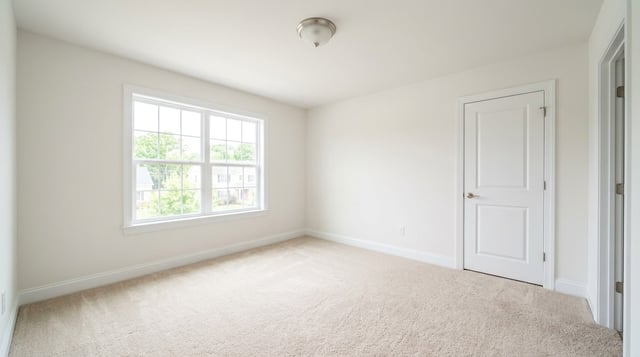
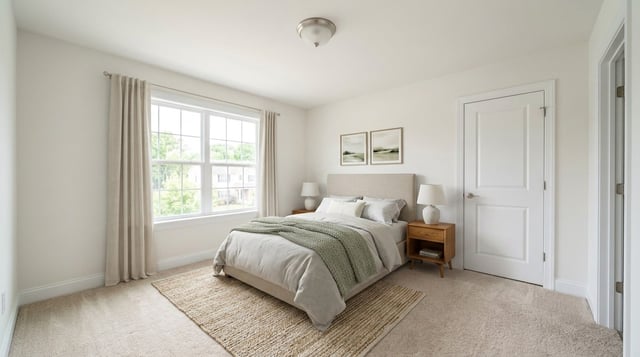
How it was made: open the RoomLab.app workspace, upload the empty room photo, choose Virtual Staging, pick the room type and a style, and generate. What held: the ceiling light, the door and its frame, the doorway on the right, the baseboards and the carpet match the original. What changed that should not have: the window came out narrower and shifted toward the middle of the wall, with the new curtains covering where its left edge used to be. That is exactly the kind of difference a buyer notices at a viewing, so compare windows, doors and fixtures against the original before you list, and regenerate when something permanent moves. A physical stager never has that problem, which is the honest trade-off for the lower cost.
Verdict: tie for photo impact, physical staging wins for in-person walkthroughs.
Which delivers better ROI on sale price and time on market?
Staging overall shows a real ROI signal, though the NAR data doesn't isolate virtual from physical. 49% of sellers' agents report that staged homes spend less time on the market, and 29% say staging increased the offered sale price by 1% to 10% (NAR 2025 Profile of Home Staging, n=1,266). These are agents' survey answers, not a measured effect.
What are the results of virtual staging compared to regular staging? No large public study measures the two head-to-head, so nobody can honestly say one sells a home faster than the other. The evidence that exists is about staging in general and about listing photos, which is where virtual staging does its work. We go through what that data does and does not show in does virtual staging help homes sell faster?
Because the survey covers staging as a category rather than comparing virtual against physical head-to-head, treat those percentages as evidence that staging in general helps, not proof that one method outperforms the other on price. What we can say with confidence: 21% of sellers' agents stage all their sellers' homes before listing, and the living room is the most commonly staged room, named by 91% of sellers' agents, so if you're staging only one room, that's the one with the most established track record (NAR, 2025).
On a pure cost-to-benefit basis, virtual staging's near-zero cost means it takes almost no lift in price or days-on-market to justify itself. Physical staging needs a larger benefit to clear its much higher cost, which is why it makes more sense on higher-priced listings where a percentage-point price lift is worth more in dollar terms.
Verdict: virtual staging has the better cost-to-benefit ratio, physical staging can still pay off on higher-value listings.
Which is easier to revise or customize?
Virtual staging wins here too. Changing a room's style with AI virtual staging means picking a new preset and regenerating the photo, which takes a few minutes. Changing a physically staged room means calling the stager back, swapping out furniture, and paying for a second setup.
That flexibility is useful beyond aesthetics. If a listing has been sitting and the agent suspects the current staging style isn't landing with buyers, virtual staging lets you test a different look (modern versus traditional, minimal versus warm and layered) for the cost of another image instead of another delivery. Physical staging locks you into one look for as long as the furniture stays in the house.
Verdict: virtual staging wins on flexibility, by a wide margin.
Do MLS rules treat virtual and physical staging differently?
Yes. Many MLS boards require photos to be labeled as virtually staged, since the furniture in the photo isn't actually in the house. Physical staging needs no such disclosure, because what's in the photo is what's in the room.
Disclosure requirements vary by MLS, so agents should confirm the specific wording their board requires before publishing virtually staged photos. It's a minor extra step, typically a caption or watermark, but skipping it can violate MLS rules and create a mismatch between what buyers see online and what they find at a showing. For the rules and sample disclosure wording, see is virtual staging legal?
Who should choose virtual staging vs physical staging?
If your listing is vacant and needs photos fast, choose virtual staging. If buyers will walk through the furnished room in person, physical staging still has a role. Here's how that breaks down by situation.
Agents on a budget or staging every listing: choose AI virtual staging. At a few cents to about a dollar per image, you can furnish every room in every listing without touching a staging budget.
Listings that draw mostly online and remote buyers: choose virtual staging. The full AI virtual staging workflow gets photos MLS-ready the same day, which matters most when the photo is the buyer's primary touchpoint. If you are still choosing a tool, our ranking of the best AI virtual staging software compares the main options.
High-end listings with frequent in-person tours: consider physical staging, or a hybrid: physically stage the rooms buyers will walk through most (living room, primary bedroom), and use virtual staging for secondary rooms and online-only angles.
Agents who want to show buyers the transformation, not just the end result: pairing staged photos with a before-and-after clip adds another layer. See our guide on turning an empty room into a staged room on video for that workflow. If you already walked the vacant room with your phone, RoomLab.app's Edit Video can furnish the room in the clip you shot while keeping the same camera movement.
Frequently asked questions
Is virtual staging cheaper than physical staging?
Yes, by a large margin. AI virtual staging can cost as little as $0.03 per photo, traditional virtual staging costs $10-50 per photo, and physical staging can run up to $2,800 per listing (a sponsored post by an AI staging vendor on nar.realtor, 2024).
How much does virtual staging cost per photo?
It depends on who does it. Traditional virtual staging services, where a designer edits each image, charge around $10 to $50 per photo, and AI tools go as low as $0.03 per photo (sponsored vendor post on nar.realtor, 2024). On RoomLab.app one Virtual Staging image costs 10 credits, which is $0.33 to $1.00 per image depending on the plan (USD, as of October 2026). Budget for two or three generations per room.
How is virtual staging priced?
Three ways: per photo (traditional services), monthly subscriptions with an image allowance, or prepaid credits spent per image. RoomLab.app uses credits, sold as a one-time pack or with a monthly plan. Physical staging is different again: it is quoted per listing, because it covers furniture rental, delivery, setup and pickup.
What are the disadvantages of virtual staging?
Three main ones. Buyers touring in person see an empty room, so the photos have to do the work. Many MLS boards require a virtual staging label. And AI output can change permanent features, such as resizing a window or dropping an outlet, so every image needs checking against the original before it goes on a listing.
Does virtual staging help a home sell as well as physical staging?
Staging in general is linked to faster sales and higher offers: 49% of sellers' agents report less time on market and 29% report a 1-10% price lift after staging (NAR 2025). That data doesn't separate virtual from physical, so treat it as evidence for staging broadly rather than a head-to-head result.
Do I need to disclose that a listing photo is virtually staged?
Often, yes. Many MLS rules require a label or caption on virtually staged photos, since the furniture shown isn't physically in the home. Physical staging doesn't require this disclosure because the furniture is real. Check your specific MLS board's policy before publishing.
Can I combine virtual staging and physical staging on the same listing?
Yes. Many agents use a hybrid on higher-end listings. Physically stage the rooms buyers will walk through most, then use virtual staging for secondary rooms, alternate angles, or additional style options, keeping the higher physical staging cost focused on the spaces that get the most in-person traffic.
Which rooms should I stage first?
The living room, by a wide margin. It is the most commonly staged room, named by 91% of sellers' agents (NAR, 2025). If budget or time only allows one room, start there.
Verdict: virtual staging vs physical staging
| Category | Winner |
|---|---|
| Cost | Virtual staging |
| Turnaround | Virtual staging |
| In-person impact | Physical staging |
| Cost-to-benefit ROI | Virtual staging |
| Flexibility / revisions | Virtual staging |
| Overall | Virtual staging, for most listings |
For most listings, especially anything vacant, remote-buyer-heavy, or on a tight timeline, virtual staging is the clear choice on cost, speed, and flexibility. Physical staging keeps its place for high-end properties with heavy in-person showings, where a buyer walking through a furnished room in person still carries weight a photo can't fully replace.
Sources
- Sponsored post by an AI staging vendor on nar.realtor, Styled, Staged & Sold: Generative AI is Your Ally for Smart Staging (2024), retrieved 2026-10-05.
- National Association of Realtors, 2025 Profile of Home Staging (n=1,266), retrieved 2026-10-05.
Ready to Transform Your Space?
Start creating stunning room transformations in minutes. Sign up and try it yourself!
More Articles

Does Virtual Staging Help Homes Sell Faster? The Data
Staging is linked to faster sales in NAR's agent survey, but no public study isolates virtual staging's effect on days on market. What the data proves, what it doesn't, and a real before and after.
9 min read

How to Change the Flooring in a Photo of Your Room
Upload a photo of your room and a photo of any flooring sample, and RoomLab.app lays the new floor into your real room. Step-by-step guide with two real before and after examples and the limits to check.
8 min read
SketchUp and 3D Model to Photorealistic Render With AI (No V-Ray)
SketchUp AI render without V-Ray: export a view or an OBJ, FBX or GLB file, upload it, set the lighting, and see two real before/after results.
10 min read