Does Virtual Staging Help Homes Sell Faster? The Data
 David Sirera
 The short answer: probably, but the evidence is thinner than most articles admit. In the National Association of Realtors' 2025 staging survey, 49% of sellers' agents said staging reduced a home's time on market (Source, 2025). That figure covers staging in general, is based on agents' observations rather than sale records, and does not separate virtual from physical staging. We found no public study that measures virtual staging's effect on days on market on its own. What virtual staging reliably does is fix the listing photos of an empty room, which is where buyers form their first impression. RoomLab.app stages an empty room photo in about a minute, so the cost of testing it on your own listings is small.
We build a virtual staging tool, so we have a reason to tell you it works. That is exactly why this article sticks to what the numbers can and cannot support, shows a real result from our own tool, including one that we would not put on a listing, and ends with a way to measure the effect on your own sales instead of trusting anyone's headline.
Key takeaways
- Staging and speed: 49% of sellers' agents said staging reduced time on market, and 29% saw offers 1% to 10% higher (NAR 2025 Profile of Home Staging, n=1,266).
- The other half: the rest of the agents surveyed did not report a faster sale. That does not prove staging failed for them, but the data supports "often", not "always".
- No virtual-only study: the survey covers staging broadly. Treat any precise "virtually staged homes sell X% faster" figure with suspicion unless it links to a method.
- Why it can work: 89% of listing agents and 77% of buyers say listing photos are crucial (NAR, 2023), and an empty room photographs badly.
- It only helps if it is honest: stage furniture, never change walls, floors or windows, and label the photo as virtually staged.
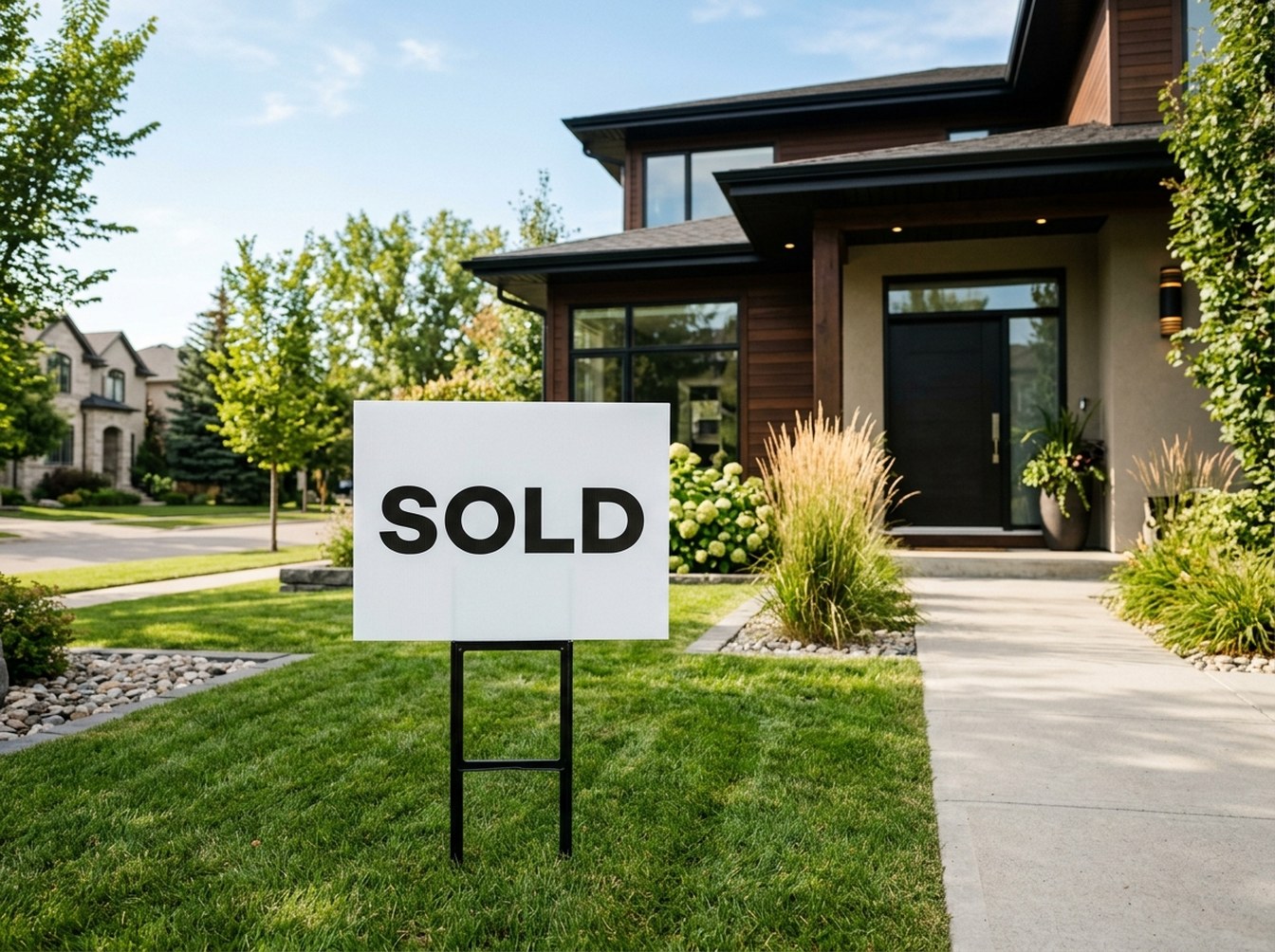
Does virtual staging help sell a house faster?
It can, and the reason is the photos, not the furniture. Buyers judge a listing by its photos before they decide to visit. A bare room with white walls and a wood floor gives them nothing to judge scale or use by, so it reads as smaller and colder than it is. Virtual staging puts a sofa, a rug and a bed into those photos, which is the same job physical staging does for the listing photos, at a fraction of the cost and in minutes instead of days.
What nobody can honestly tell you is how many days it saves. The best public data measures staging as a whole, relies on agents' recollection, and cannot rule out that staged homes also tend to be better priced, better photographed and better marketed. So the fair answer is: virtual staging removes one known obstacle to a quick sale, an empty room that shows badly online, and the size of the effect on your listing depends on everything else about it.
Do staged homes sell faster? What the NAR data actually says
The most cited source on staging and time on market is the National Association of Realtors' Profile of Home Staging. In its 2025 edition, 49% of sellers' agents said staging reduced the time a home spent on the market, and 29% said staging led to offers 1% to 10% higher. On the buyer side, 83% of buyers' agents said staging made it easier for a buyer to picture the property as their future home (Source, 2025).
Those are real numbers from a named survey of 1,266 agents, which is more than most staging claims can say. But read them for what they are. First, they are agents' judgments, not a comparison of days on market between staged and unstaged homes. Second, the headline figure is under half: the chart below shows the part that usually gets left out.
So about half of the sellers' agents surveyed saw staging shorten the time on market. That is a strong signal, not a guarantee, and anyone who presents it as one is selling something. That includes us, which is why the chart shows the other half too.
Why is there no hard data on virtual staging specifically?
Because the data needed to measure it mostly does not exist in a usable form. Three problems get in the way:
- Listing systems rarely record it. Listing data does not usually record whether photos were virtually staged, so nobody can easily pull thousands of virtually staged sales and compare them with empty ones.
- Staged homes differ in other ways. The seller who pays for staging is often the same seller who repaints, prices carefully and hires a good photographer. A simple comparison credits the staging with all of that.
- The loudest numbers come from sellers of staging. Many precise "sells X% faster" figures on staging websites trace back to no primary study at all. If a number does not link to who was surveyed, how many and when, do not repeat it to a client.
None of this means virtual staging does not work. It means the honest version of the claim is about photos and buyer perception, which do have evidence behind them, rather than a precise number of days saved.
Why would virtual staging speed up a sale at all?
Because most buyers meet a home through its photos before they ever walk in. 89% of listing agents and 77% of home buyers say listing photos are crucial (Source, 2023). If the photos are the first filter, then anything that makes a buyer stop scrolling and book a viewing moves the sale forward, and more viewings early is how listings avoid going stale.
Empty rooms are where photos fail most. With no furniture there is nothing to show how big the room is, where the bed goes, or whether a dining table fits by the window. That is the gap virtual staging closes, and it is why the living room, the room buyers use to judge the whole home, is the most staged room at 91% in the NAR survey (Source, 2025). For the full staging workflow, see our guide to AI virtual staging for real estate.
What does a virtually staged listing photo look like?
Here is a real input and output from the RoomLab.app examples library, made with the Virtual Staging tool on an empty living room photo. The output is shown as generated, with no retouching.
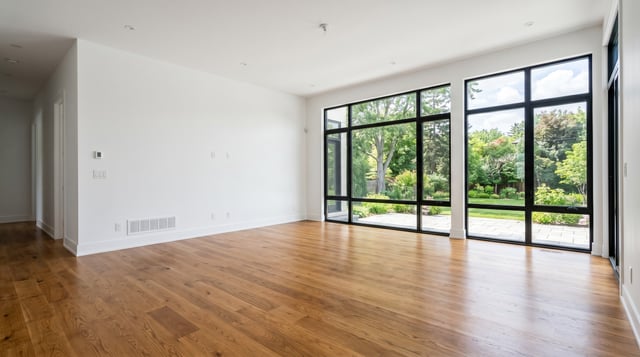
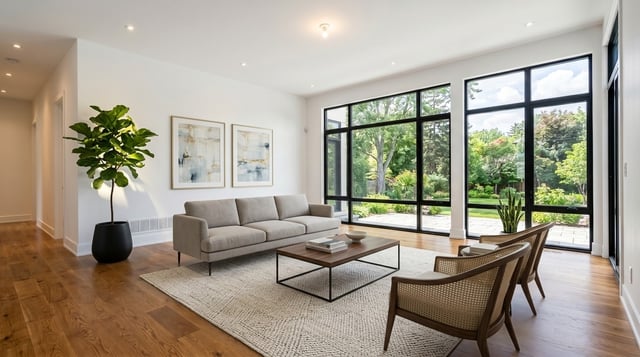
What held: the windows and their black frames, the oak floor, the recessed lights, the doorway on the left and the view of the garden are the same as in the original. It is not perfect: the thermostat, light switches and outlets on the left wall are gone, and the smoke detector on the ceiling became a small light, so a careful agent would regenerate or retouch those before listing. That matters more than how nice the sofa is, because a buyer who books a viewing will see those features in person. What it adds for a buyer: the sofa and rug show the room comfortably fits a full seating area facing the garden, which the empty photo never communicated. See the full living room staging example with its before and after slider.
The limitation: check that nothing permanent changed
Not every output is listing-ready, and this is the check that decides whether staging helps or hurts. Below is another Virtual Staging output from the same library, on an empty dining room with an oak floor, recessed ceiling lights and a bay window onto the garden.
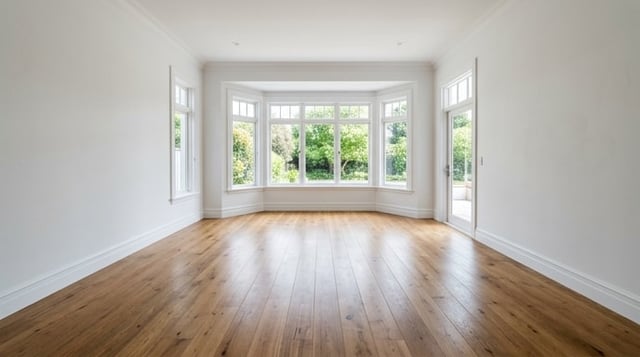
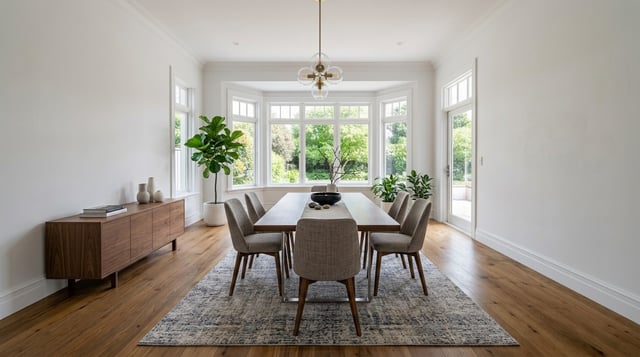
The furniture is well chosen and the room itself held: the bay window, the oak floor, the glass door and the recessed lights all match the original. But the output also hung a glass globe pendant over the table, and the real ceiling has only recessed lights. It is a small change, and exactly the kind a buyer notices at a viewing, at the moment you need them to trust the listing. Before you publish any staged photo, compare it with the original: walls, floor, windows, doors, fixed lighting and the view should all match. If they do not, regenerate or discard it.
When does virtual staging not help, or backfire?
Virtual staging stops helping, and can slow a sale, when the photos promise something the showing cannot deliver. The common cases:
- Permanent features were changed. Even a small one, like the light fitting in the dining room above. Staging should add furniture and decor, not new floors, walls, windows or fixed lighting.
- It is not disclosed. NAR notes that REALTORS® have a duty under Articles 2 and 12 of their Code of Ethics to disclose digitally altered or staged images (Source, 2024), and many MLSs and at least one state now require a label. Our article on whether virtual staging is legal covers the rules.
- The furniture is out of scale. A huge sectional in a small room makes it look bigger online and smaller in person. Keep pieces in proportion to the space.
- The problem is not the photos. If a home is overpriced or needs repairs, better photos bring more viewings of a home buyers still will not offer on. Staging cannot fix price.
- The home is already furnished well. Virtual staging adds the most to empty rooms. A furnished room with dated or cluttered furniture needs Declutter Room or Empty Room first, not more furniture on top.
How do you give virtual staging the best chance of a faster sale?
Treat it as a photo fix for the rooms that show worst, apply it carefully, and label it. In RoomLab.app the process looks like this:
- Start with the living room. It is the room most often staged and the one buyers use to judge the home. Add the primary bedroom and dining room next if they are empty.
- Shoot the empty room well. Daylight, lights on, camera at chest height from a corner so the floor and at least two walls are visible. The staging can only be as good as the photo under it.
- Open the RoomLab.app workspace, choose Virtual Staging, upload the photo and pick a style that suits the likely buyer rather than your own taste. Neutral, modern styles are the safe default for most listings.
- Compare with the original using the before and after slider. Check walls, floor, windows and fixed lighting, as in the dining room example, and regenerate if anything permanent changed.
- Label it and keep the original. Caption the photo as virtually staged and keep the empty version on file for anyone who asks.
If you are deciding between this and hiring a stager, our comparison of virtual staging vs physical staging covers cost, turnaround and what each does better. Agents who stage every listing can see the full workflow on our real estate staging page.
How can you tell if virtual staging made your listing sell faster?
Measure it on your own listings, because no public number will tell you. You do not need a study, just consistent records:
- Track days on market for listings you staged virtually and for comparable ones you listed empty, in the same area and price band.
- Watch the early signals: online listing views, saves and viewing requests in the first two weeks. These react to photos faster than the sale price does.
- Change one thing at a time. If you restage, reprice and rephotograph in the same week, you will not know which one worked.
After a handful of listings you will have a more useful answer for your market than any headline percentage, including the ones in this article.
Frequently asked questions
Do staged homes sell faster than empty ones?
Often, according to agents. In NAR's 2025 survey, 49% of sellers' agents said staging reduced time on market (NAR, 2025). That is based on agents' observations of staging in general, not a measured comparison of staged and empty sales.
Does virtual staging help sell a house?
It helps the listing photos, which is where most buyers decide whether to visit. 89% of listing agents and 77% of buyers say listing photos are crucial (NAR, 2023). No public study isolates how much faster virtually staged homes sell, so treat precise claims with caution.
Is virtual staging as effective as physical staging?
For listing photos, it does the same job. In person, physical staging wins because buyers can walk through the furnished rooms. The NAR data does not compare the two methods directly.
Can virtual staging hurt a sale?
Yes, if the photos misrepresent the home. Changing walls, floors or windows, using furniture that is out of scale, or not labelling the photos can leave buyers disappointed at the showing. Stage furniture only and disclose it.
The bottom line
About half of sellers' agents report that staging shortens the time on market, virtual staging is the cheapest way to get its main benefit into your listing photos, and no one has published a trustworthy number for exactly how much faster it makes a sale. Stage the empty rooms that photograph worst, keep every permanent feature exactly as it is, label the photos, and track your own days on market. Your first RoomLab.app image is free, no card required, so you can stage one room and judge the result before you pay anything.
Sources
- National Association of Realtors, NAR Report Reveals Home Staging Boosts Sale Prices and Reduces Time on Market (2025 Profile of Home Staging, n=1,266), retrieved 2026-09-28.
- National Association of Realtors, Styled, Staged & Sold: Generative AI Is Your Ally for Smart Staging, Faster Deals (citing the 2023 Profile of Home Staging), retrieved 2026-09-28.
Ready to Transform Your Space?
Start creating stunning room transformations in minutes. Sign up and try it yourself!
More Articles
How to Change the Flooring in a Photo of Your Room
Upload a photo of your room and a photo of any flooring sample, and RoomLab.app lays the new floor into your real room. Step-by-step guide with two real before and after examples and the limits to check.
8 min read
SketchUp and 3D Model to Photorealistic Render With AI (No V-Ray)
SketchUp AI render without V-Ray: export a view or an OBJ, FBX or GLB file, upload it, set the lighting, and see two real before/after results.
10 min read
Is Virtual Staging Legal? MLS Disclosure Rules in 2026
Yes, virtual staging is legal everywhere in the US, but a growing number of MLSs and a new California law require you to disclose it. Here's what's actually required and how to stay compliant.
8 min read